10Cric

Online Poker in 2026: Formats, Rules, Live Dealer Tables, and Real-Money Safety

Last updated: February 2026 · Reviewed by: Nadia Farzana Haque, Chief Sports Editor, with the iGaming research desk · Audience: beginners and intermediate players, including readers in South Asia and Bangladesh · 18+ only

Table of ContentCloseOpen
Short Version What This Guide Covers

Short Version: What This Guide Covers

Online poker in 2026 splits into three structurally different products. First, peer-to-peer (PvP) poker rooms, where you compete against other people. Second, live dealer casino poker, where you play house-banked hands against a real dealer on video. Third, RNG video poker, where a random number generator deals to a fixed paytable. The rules of the cards are broadly shared: a 52-card deck, ten hand ranks, best five-card hand wins. The economics are not shared at all. PvP poker is a zero-sum game between players minus rake, while poker casino formats carry a permanent house edge of roughly 2.16% to 2.5%, depending on the variant and the paytable. Real-money play adds deposits, KYC verification, geo-restrictions and genuine financial risk, so the safe route is licensed operators, documented withdrawal terms, and pre-set deposit and loss limits. Legality varies sharply by jurisdiction: in Bangladesh, for example, the Public Gambling Act, 1867 remains the governing statute and the BTRC periodically blocks gambling domains, so nothing here should be read as an invitation to break local law.

«Explain the product first. Never promise a result. If a claim cannot be sourced, say so in the text.» Nadia Farzana Haque, Chief Sports Editor, editorial note on our iGaming coverage standards (2026).

What Changed by 2026, and Why

What Changed by 2026, and Why It Matters Before You Read On

A quick orientation, because the market of five years ago is not the market you are looking at now.

Three shifts stand out. Live studio supply has consolidated around a handful of large providers, which means the same Casino Hold'em rule set now appears under a dozen different casino brands, and the only meaningful difference is the paytable and the payout window. Identity checks have moved later in the funnel: registration is easier than ever, verification usually bites at withdrawal, and that mismatch generates most payout complaints.

And enforcement in restrictive markets has become network-level rather than personal, with domain blocking and payment friction doing the work that prosecution used to do.

One more thing worth naming. Free-play and social poker apps are now the main entry point for young players, which is why we treat poker demo mode as a rule-learning tool with an expiry date, not as harmless entertainment.

Read this guide in that order: product first, mathematics second, law and money third, and only then the question of where to play.

1. Live Poker vs Video Poker

  1. Live Poker vs Video Poker vs PvP Poker: The 60-Second Explainer

Most confusion among new players comes from treating "poker" as one product. It is at least three.

How poker live casino differs from classic online poker and video poker:

  1. Your opponent. At a live casino poker table you play strictly against the house (the dealer), not against other players. Bluffing plays no role whatsoever, because the dealer's actions are dictated by fixed qualification rules rather than by reads or psychology.
  2. How cards are produced. In poker live dealer games the cards are dealt on camera by a human dealer from a physical deck, then read into the game engine by optical card recognition (OCR). In RNG video poker, hands are generated algorithmically by a certified random number generator.
  3. Tempo and decision pressure. Unlike RNG video poker or slots, a live table runs on a betting timer, typically 10 to 15 seconds per decision. And unlike a PvP cash game, you cannot tank for two minutes to work out a marginal spot.
  4. Where the edge lives. In PvP poker your long-run result depends on your skill edge relative to the table, minus rake. In casino poker and video poker the paytable embeds a permanent, non-negotiable house edge; optimal poker strategy reduces it but never eliminates it.
  5. Demo availability. RNG video poker and many casino-poker variants offer free-play demos. Live dealer tables generally do not. The studio, dealer and stream cost real money to run, so free demo seats are rare.
ParameterPvP Online PokerLive Dealer Casino PokerRNG Video Poker
OpponentOther playersThe house (live dealer)The house (software)
Skill influenceHigh and cumulativeLimited to optimal decisionsLimited to optimal holds
Expected valueCan be positive for strong playersNegative by design (house edge)Negative by design (paytable)
PaceSlower, decision-heavyModerate, timer-drivenFastest, continuous
Human dealerNoYesNo
Demo / free playPlay-money tables widely availableRare or unavailableWidely available
Typical minimum stakeMicro-stakes availableHigher (studio overhead)Very low
BluffingCentralIrrelevantIrrelevant

Three columns, three different games. Keep that table in mind whenever a promotion lumps them together as "poker games".

2. Poker vs Sports Betting vs Casino Games

Readers arriving from search often need to place poker on the wider gambling map before anything else makes sense.

CriterionPoker (PvP)Sports BettingCasino Games (slots, roulette, banked poker)
Primary determinantSkill + variance across many handsSports knowledge + market pricingFixed mathematics of the game
CounterpartyOther bettors/playersBookmaker (or exchange peers)The operator
Operator revenueRake / tournament feeOverround (margin in odds)House edge / RTP shortfall
Event frequencyDozens of hands per hourEvent-bound (minutes to days)Continuous, seconds per round
Risk profileModerate, session-dependentModerate, inducement-drivenHighest event frequency
Legal framingSometimes argued as a game of skillOften separately regulatedAlmost always gambling

That last row matters for readers in restrictive jurisdictions. Whether poker counts as a "game of skill" or a "game of chance" is precisely the question courts in South Asia have wrestled with, and the answer determines whether a platform is legal, tolerated, or blocked. Sports coverage and betting products are regulated separately in many markets; a sports-first portal explaining fixtures is not the same legal object as a real-money poker room, and readers deserve to see that line drawn clearly.

3. Evidence Base and Methodological Overview

  1. Evidence Base and Methodological Overview

This guide is built on three layers of material. The first is product documentation from live casino suppliers, which defines exact bet mechanics, dealer qualification thresholds and side-bet paytables. The second is peer-reviewed and preprint research from 2023 to 2026 on skill, harm markers, self-exclusion, marketing inducements and simulated gambling. The third is a structured operator-screening protocol: licence verification, bonus terms extraction, withdrawal-rule capture, and support-channel testing, each recorded as a dated, numbered checklist item so that conclusions stay auditable rather than impressionistic.

Where a claim could not be verified against a primary source, we say so in the text instead of papering over it. Two examples appear later: the alleged protective effect of tournament structures, and the isolated risk profile of video poker as a standalone product. Both are plausible, both are widely repeated, and neither is currently supported by a dedicated 2023 to 2026 study.

Note for readers comparing platforms. A licensed operator such as Casino lists classic poker, poker live dealer formats and casino-banked variants in one lobby, which makes paytables and limits easier to compare side by side. Check the terms yourself before anything else.

4. Online Poker Products and Game Formats

Regulatory and game-rule documents draw a hard line between player-versus-player poker and house-banked table games. The distinction is defined by who carries the opposing risk: in PvP poker the operator hosts and rakes; in house games the operator is the opponent and pays winners from its own bankroll.

4.1 Classic Online Poker versus Casino Poker

In classic poker online, your long-run result is a function of your edge over the other players at the table, the rake charged per pot or per entry, and variance. Nothing in the paytable is working against you, because there is no paytable. The money comes from other players' mistakes rather than from a house edge baked into game paytables.

«Skill plays a substantial role in determining profits and losses, particularly as the number of hands played increases.» Hergueux & Smagghue, The dominance of skill in online poker, ScienceDirect (2023). https://www.sciencedirect.com/science/article/pii/S0167268123000045

In casino poker formats, the operator functions as both host and opponent. The mathematics are inverted. Your decisions can move the expected loss from, say, 8% of turnover down to roughly 2%, but they cannot make it positive. That structural difference also shows up in harm data, where casino-style products consistently rank above other product categories.

«Among online casino and slot players, problem gambling prevalence was highest, at approximately 15.8%.» Tran et al., meta-analysis of product-specific gambling risk (2024). https://doi.org/10.1007/s10899-024-10291-8

It would be a mistake, though, to conclude that PvP poker is psychologically inert. The skill-based framing does not fully shield players from psychological vulnerability.

«Online poker players show associations with impulsivity and cognitive distortions, indicating psychological vulnerability even in a skill-based game.» Giustiniani et al., clinical study of online poker players (2024). https://doi.org/10.1007/s11469-023-01070-w

What differs is the shape of the risk. High-speed staking, continuous play and rapid re-deposit are more characteristic of fast-paced casino games than of slower, decision-intensive peer-to-peer poker.

«High-speed betting, continuous play and rapid re-deposit are key behavioural markers of harm, characteristic above all of casino products.» Delfabbro, Parke & Catania, review of behavioural tracking (2024). https://doi.org/10.1007/s10899-024-10300-w

4.2 Popular Poker Games Texas Hold'em

Texas Hold'em. Each player receives two private hole cards; five community cards are dealt across three stages (flop, turn, river). The best five-card hand from any combination of the seven available cards wins. Four betting rounds: pre-flop, flop, turn, river. This is the hold em structure almost every other variant borrows from.

Omaha. Each player receives four hole cards and must use exactly two of them plus three community cards. The extra hole cards inflate hand strength distributions dramatically, which is why Omaha pots are larger and variance is higher than in Hold'em at equivalent stakes.

Casino Hold'em. A five-card, house-banked variant. Ante bet, then two hole cards and a flop, then a decision to fold or Call (2× Ante), then turn, river and the dealer's cards revealed. Ante payouts scale with hand quality up to 100:1 for a Royal Flush.

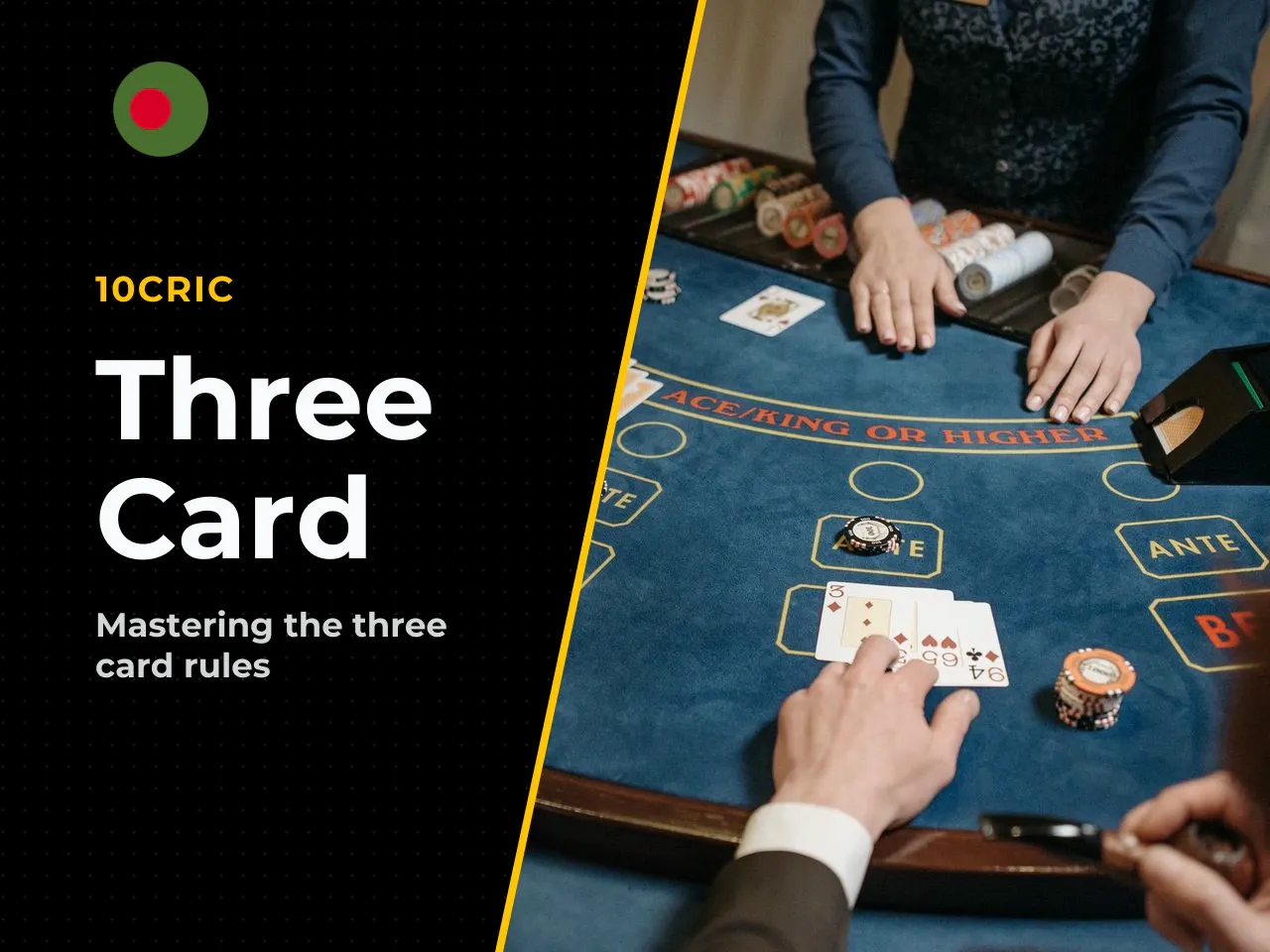
Three Card Poker. Player and dealer each receive three cards. The dealer must reach Queen High to qualify. Optional Pair Plus and Six Card Bonus side bets pay up to 1,000:1 independently of the dealer's hand.

Caribbean Stud Poker. Five cards each; one dealer card face up. Fold or Call at 2× Ante. The dealer must hold Ace-King or better to qualify. The optional 5+1 Bonus pays up to 1,000:1, and a progressive jackpot side bet pays on a Royal Flush.

Video Poker. A single-player RNG product built on draw-poker mechanics with a published, deterministic paytable. Player skill consists entirely of correct hold and discard decisions, and optimal play on some paytables approaches 99%+ theoretical return.

Evidence note: the frequently repeated claim that video poker shares the structural risk profile of other deterministic-paytable games with continuous play is intuitively consistent with the harm-marker literature, but we found no 2023 to 2026 study isolating video poker as a distinct product category. Treat it as a reasonable inference, not an established finding.

4.3 Cash Games, Sit Gos, and

4.3 Cash Games, Sit & Gos, and Poker Tournaments

Cash games. Chips equal money one-for-one. Buy-in is chosen within table limits, blinds never rise, and you may leave at any time. This is the format with the fewest structural brakes on session length or expenditure.

Sit & Go (SNG). A single-table or small-field tournament that begins once seats fill. The buy-in splits into prize pool and fee, blind levels escalate on a fixed schedule, and only the top finishers are paid. Duration is bounded, usually 20 to 90 minutes.

Multi-table tournaments (MTT). One entry feeds a shared prize pool; blinds rise on a published structure; payouts spread across many places with a steeply top-heavy curve. Variance is extreme, and a genuinely winning MTT player can run below break-even for hundreds of entries.

It is often argued that tournaments offer some protective features compared with unconstrained cash play, because tournaments involve fixed buy-ins and a predefined duration. Evidence on the extent of that protective effect remains mixed, and we could not locate a 2023 to 2026 study testing it directly. A more defensible formulation: tournament formats cap the cost of a single entry, but re-entries, rebuys and add-ons can dissolve that cap entirely. So the protection depends on the specific structure, not on the word "tournament".

What research does show is that players adjust their behaviour across sessions, escalating or modifying risk over time even in a skill-based game.

«Players adjust table selection and stake size between sessions, often increasing risk following previous outcomes.» Tom et al., study of the second session at a virtual poker table (2023). https://doi.org/10.1007/s10899-022-10179-3

Format choice is also an occupational decision for a minority of players who treat poker as income-generating work.

«Professional poker players treat format selection, whether cash games, tournaments or Sit & Gos, as part of a work strategy accounting for variance and lifestyle.» Weidner, Gambling as Work: A Study of German Poker Players (2024). https://doi.org/10.1007/s10899-023-10258-3

5. Rules and Structural Properties of Poker and Casino Poker

5.1 Hand Rankings and the 52-Card

5.1 Hand Rankings and the 52-Card Deck

A standard deck contains 52 cards, no jokers: four suits (D diamonds, H hearts, S spades, C clubs) across thirteen ranks (2 to 10, J, Q, K, A). So 7S denotes the seven of spades, and AC KC QC JC TC denotes a Royal Flush in clubs.

The full 52-card deck, in code form:

2C 3C 4C 5C 6C 7C 8C 9C TC JC QC KC AC · 2D 3D 4D 5D 6D 7D 8D 9D TD JD QD KD AD · 2H 3H 4H 5H 6H 7H 8H 9H TH JH QH KH AH · 2S 3S 4S 5S 6S 7S 8S 9S TS JS QS KS AS

There are 2,598,960 distinct five-card hands. Their exact distribution is the mathematical bedrock of every poker decision you will ever make:

RankHandCompositionExampleCombinationsProbability
1Royal FlushT-J-Q-K-A, one suitAC KC QC JC TC40.000154%
2Straight FlushFive consecutive, one suit9H 8H 7H 6H 5H360.00139%
3Four of a KindFour of one rank + kicker8S 8D 8H 8C KD6240.0240%
4Full HouseThree of a rank + a pairJS JD JC 4H 4S3,7440.1441%
5FlushFive of one suit, non-sequentialKD JD 8D 6D 3D5,1080.1965%
6StraightFive consecutive, mixed suits8C 7D 6S 5D 4H10,2000.3925%
7Three of a KindThree of a rank + two kickers5S 5D 5H QC 2H54,9122.1128%
8Two PairTwo pairs + kicker9S 9D 4C 4H KS123,5524.7539%
9One PairOne pair + three kickersAS AD 9C 4H 2S1,098,24042.2569%
10High CardNone of the aboveAH JD 8S 6C 3H1,302,54050.1177%

Two numbers deserve highlighting. Over 92% of random five-card hands are one pair or worse, and a Royal Flush appears roughly once every 650,000 hands. Any product advertising a 1,000:1 Royal Flush jackpot is pricing a very rare event, and pricing it in its own favour.

5.2 Flow of a Texas Hold'em

5.2 Flow of a Texas Hold'em Hand

  1. Blinds and button. The dealer button rotates clockwise. The player to its left posts the small blind, the next the big blind.
  2. Pre-flop. Two face-down hole cards to each player. Action begins left of the big blind. Options: fold, call, raise.
  3. Flop. One card burned, three community cards face up. Betting round: check, bet, call, raise, fold.
  4. Turn. One card burned, one community card face up. Betting round with the same options.
  5. River. One card burned, the fifth and final community card face up. Final betting round.
  6. Showdown. If two or more players remain, hands are revealed and the best five-card combination from the seven available cards takes the pot. Identical hands split it.

The same sequence underpins live Casino Hold'em, with one crucial amendment: the dealer's decisions are automatic, and your only choices are Ante, Call or Fold, plus optional side bets.

On automated assistance, a short warning. The current generation of general-purpose language models is not a reliable strategy oracle, and it fails in exactly the spots where beginners want help.

«ChatGPT and GPT-4 can articulate general playing principles but systematically deviate from optimal decisions in non-standard pre-flop situations.» Das et al., Are ChatGPT and GPT-4 Good Poker Players?, preprint (2023). https://arxiv.org/abs/2308.12466

5.3 Betting Structures, Pots, and Payouts

5.3 Betting Structures, Pots, and Payouts

Bet is the first wager on a street. Raise is an increase over an existing bet. Call means matching it. Check means passing when no bet is live. Fold means surrendering the hand.

The pot is the total of all chips committed during a hand. When a player is all-in for less than the full action, the pot splits into a main pot (which the short-stacked player can win) and one or more side pots, contested only by players who covered the additional betting. Each pot is awarded separately, and the winner of a side pot cannot claim more than the branch of the pot they were eligible for.

In house-banked poker, payouts are formulaic rather than contested. The Ante or Call bet is paid at a published multiple of the stake according to hand strength, and side bets resolve independently of whether you beat the dealer.

«Event frequency, flexibility of staking limits and payout structure are the key structural factors determining the risk level of a gambling product.» Systematic review of online gambling risk factors (2023). https://doi.org/10.1007/s10899-022-10163-x

Products with very high event frequency, unconstrained stake flexibility and round-the-clock availability pose greater danger, particularly for vulnerable players. That is a structural fact about the product, not a judgement about the person playing it.

6. Live Dealer Poker and Live Casino Formats

6.1 Operational Structure of Live Dealer

6.1 Operational Structure of Live Dealer Tables

A live dealer table is a broadcast studio wired into a game server. Three technical components matter:

  • Multi-camera HD/4K streaming with synchronised audio, giving players wide-table, dealer and card-level angles, plus zoom control on some clients.
  • OCR card recognition, which reads each physical card as it is dealt and converts the image into game data for the platform logic. This is what lets a physical shoe drive a digital paytable.
  • A timed betting interface, where chip selection and wager submission are validated server-side and locked before any card is revealed. Miss the window and your bet is simply not placed.

Players can usually chat with a microphone-equipped dealer, who announces cards and actions on camera. That social layer is the product's main selling point, and also its main structural risk, because immersion lengthens sessions.

«Live casino products are heavily promoted and may be particularly appealing to younger players due to their immersive, technology-rich design.» Global review of online gambling policy and youth mental health (2026). https://doi.org/10.1007/s10899-025-10350-1

Live casino tables and RNG tables also sit side by side in the same lobby, and behaviour across the two differs in session length, bet size and engagement pattern. Worth watching in your own history.

6.2 The Live Poker Variant Reference

Every variant below is house-banked: you play against the casino, not other players, and bluffing is irrelevant. Structure for each: how it plays, betting order, dealer qualification, side bets.

6.2.1 Casino Hold'em. - How it

6.2.1 Casino Hold'em

  • How it plays. A five-card poker variant against the house. You combine your two hole cards with five community cards to beat the dealer's best five-card hand.
  • Betting order. Ante, then two hole cards plus the flop, then Call (2× Ante) or Fold, then turn, river and the dealer's cards revealed.
  • Dealer qualification. The dealer qualifies with a pair of fours or better on most house rule sets. If the dealer fails to qualify, the Ante is paid and the Call is returned.
  • Ante payouts. Scaling by hand strength, up to 100:1 for a Royal Flush.
  • Side bets. Bonus bet, which pays if a Pair of Aces or higher appears in the first five cards. Jumbo 7 Progressive Jackpot, an uncapped progressive that pays on a 7-Card Straight Flush, with lower fixed prizes for a range of other hands. Critically, jackpot prizes pay out even if you fold or lose to the dealer.

Casino Hold'em was the first live poker table to reach market, and it is now offered by essentially every major live supplier under near-identical house rules. That makes it the natural baseline for comparing paytables between operators.

6.2.2 2 Hand Casino Hold'em

  • How it plays. Identical to Casino Hold'em, except you may play one or two independent hands against the dealer in the same round. Lose one hand and the second is still live.
  • Betting order. Ante on each hand, then the flop, then an independent Call or Fold decision per hand.
  • Dealer qualification. As in standard Casino Hold'em, applied once to the single dealer hand.
  • Side bets. An optional, easy-to-play Bonus bet per hand.
  • Note. Two hands double the action and the expected turnover. Budget accordingly, because the house edge applies to each hand independently.

6.2.3 Ultimate Texas Hold'em

  • Developer. Evolution, in partnership with Scientific Games, as the exclusive online live version of the world's most popular house-banked hold em game.
  • How it plays. Ante and Blind bets are placed up front. You form a five-card hand from your two cards and three of the five community cards.
  • The Play bet, the core mechanic. You may raise once per round, and the earlier you commit, the more you may risk:
Decision pointMaximum Play bet
Before the flop (pre-flop)3× or 4× Ante
After the flop2× Ante
After the river1× Ante
Never (check to showdown)Fold, Ante and Blind lost
  • Dealer qualification. The dealer must have at least a pair for the Blind bet to pay. If the dealer does not qualify, the Blind is returned.
  • Side bets. Trips, which pays on Three of a Kind or better irrespective of the dealer's hand.
  • Edge note. Played to optimal strategy, the element-of-risk house edge in Ultimate Texas Hold'em is approximately 2.18%, which makes it one of the sharper-priced banked poker games.
6.2.4 Three Card Poker. - How

6.2.4 Three Card Poker

  • How it plays. Player and dealer each receive three cards; the highest three-card hand wins. Note the inverted ranking: a straight beats a flush here, because straights are rarer with only three cards.
  • Betting order. Ante, cards dealt, then Play (1× Ante) or Fold.
  • Dealer qualification. The dealer must reach Queen High or better. If the dealer does not qualify, the Play bet is returned and the Ante is paid 1:1.
  • Ante Bonus. Paid for a Straight or better regardless of the dealer's hand.
  • Side bets. Pair Plus, which pays on a pair or better in your three cards. Six Card Bonus, the best five-card hand from your three cards plus the dealer's three, paying up to 1,000:1. Both side bets are evaluated separately at the end of each round, so each is an entirely independent wager with its own edge.
6.2.5 Caribbean Stud Poker. - How

6.2.5 Caribbean Stud Poker

  • How it plays. Five cards to you, five to the dealer with one face up. You decide before the dealer's full hand is revealed.
  • Betting order. Ante, five cards dealt with one dealer card exposed, then Call (2× Ante) or Fold.
  • Dealer qualification. The dealer must hold Ace-King or higher. If not, the Ante is paid at 1:1 and the Call is returned.
  • Call payouts. Up to 100:1 on the Call bet for premium hands.
  • Side bets. 5+1 Bonus, your five cards plus the dealer's face-up card as a best five-card hand, paying up to 1,000:1 for a Royal Flush. Progressive Jackpot, an escalating top prize won with a Royal Flush, plus fixed-value payouts for Three of a Kind, Straight, Flush, Full House, Four of a Kind and Straight Flush.
  • History. Introduced to live casino in 2015. A functionally identical product later launched under the name Casino Stud Poker, so compare paytables rather than titles.

6.2.6 Texas Hold'em Bonus Poker

  • How it plays. Based on the traditional multiplayer Texas Hold'em structure, but played against the house, with no bet after the river card.
  • Betting order. Ante, hole cards, Flop bet decision, Turn bet decision, then the river is dealt and hands are compared.
  • Side bets. Bonus bet, paying up to 1,000:1. First Five Progressive Jackpot, a progressively increasing top prize won with a Royal Flush, with lower fixed prizes for other hands. Both resolve independently of the dealer's hand.
6.2.7 Royal Russian Poker. - How

6.2.7 Royal / Russian Poker

  • How it plays. Another house poker game where the objective is to beat the dealer's five-card hand, but with unusual post-deal options.
  • Betting order. Ante, five cards to you with one dealer card exposed, then, in addition to Fold or Call, you may buy a sixth card or swap cards for an additional fee.
  • Distinctive features. You can also insure a strong combination against dealer non-qualification, and in some rule sets help the dealer qualify when a large payout is on the line.
  • Why it matters. These options add genuine decision depth, but each purchased card or swap is an additional priced wager. The house edge is embedded in the price of every extra option.

6.2.8 "Bet On Poker" Tables

  • How it plays. A category of its own. Rather than holding a hand, you wager via a bet slip on the outcomes of a dealt card game.
  • Betting order. Odds are calculated by the house based on the game's live state, and you place bets on which hand or hand type will prevail.
  • Character. Structurally closer to in-play sports betting than to poker decision-making. Skill here is odds evaluation, not hand play.

6.3 Dealer Qualification at a Glance

GameDealer qualification thresholdConsequence if dealer fails
Casino Hold'emPair of fours or betterAnte paid, Call returned
2 Hand Casino Hold'emPair of fours or betterAnte paid per hand, Call returned
Ultimate Texas Hold'emAt least a pair (for Blind)Blind returned, Play still resolved
Three Card PokerQueen HighAnte paid 1:1, Play returned
Caribbean Stud PokerAce-King or higherAnte paid 1:1, Call returned
Texas Hold'em BonusNo qualification requirementn/a
Royal / Russian PokerVaries; insurance availableInsurance or Ante rules apply

6.4 Advantages and Limitations of Live Dealer Poker versus Classic Online Poker

ParameterLive Dealer PokerClassic Online / RNG Poker
PaceSlower: dealer actions, shuffles, streaming latencyFaster; RNG resolves instantly, autoplay possible
Sense of presenceHigh: real dealer, real cards, chatLow to moderate
Stake rangeHigher minimums (studio overhead)Lower minimums, broader mass-market access
Demo availabilityRare, tied to live sessions and real tablesWidely available in free-play mode
Transparency of dealVisual, on cameraCertified RNG, verified by audit
Multi-tablingLimitedExtensive
Decision timeFixed timer (10 to 15 s)Player-controlled
Social pressurePresent at multi-seat tablesMinimal
Mobile accessFull, though data-heavy on weak connectionsFull, lighter on data

If you want to compare the two formats yourself, Casino runs both real-dealer tables and virtual ones, and demo modes exist for the RNG versions so you can learn the rules first. Read the table limits before you sit down.

The social layer of live tables is not neutral, and readers report it themselves: peer pressure, fear of missing a win, a vague sense of obligation to keep playing.

«Peer pressure, fear of missing out on a win, and bonus offers were identified as key factors sustaining betting engagement.» Study of psychosocial and marketing influences on betting among young Australians (2025). https://doi.org/10.1007/s10899-024-10318-0

7. Payout Matrix and Strategy Cheat Sheet

7.1 Consolidated Payout Matrix

Indicative payouts for banked poker variants. Always check the specific paytable at your table, because a single step down in the Ante ladder can move the house edge by half a percentage point.

HandExampleMain game (Ante/Call)Bonus / side bet range
Royal FlushAS KS QS JS TS100:1100:1 to 1000:1
Straight Flush9H 8H 7H 6H 5H20:150:1
Four of a Kind8S 8D 8H 8C KD10:140:1
Full HouseJS JD JC 4H 4S3:130:1
FlushKD JD 8D 6D 3D2:120:1
Straight8C 7D 6S 5D 4H1:110:1
Three of a Kind5S 5D 5H QC 2H1:17:1
Two Pair9S 9D 4C 4H KS1:16:1
Pair (Aces or better)AS AD 9C 4H 2S1:15:1
7.2 Basic Strategy Cheat Sheet. Baseline

7.2 Basic Strategy Cheat Sheet

📐 Baseline mathematical strategy for Live Casino Hold'em (house edge roughly 2.16% to 2.5%):

Always CALL when:

  • You hold any pair or better;
  • Your hole cards include an Ace (A) or King (K);
  • You have a draw, one card short of a flush or a straight;
  • Both of your hole cards outrank all three flop cards.

Always FOLD when:

  • Neither of your cards is above a 10 and you have no flush or straight draw. Example: you hold 4S 7D on a JC 9H 2D flop. Fold, without a second thought.

Why folding matters. In Casino Hold'em the Ante is lost on a fold, but the Call is 2× the Ante. Folding a hopeless hand saves two units in order to lose one; calling every hand pushes the house edge from roughly 2.5% to well above 8%. Discipline in marginal spots is the strategy.

RTP context. Recommended live poker lobbies typically publish theoretical win rates in the 96.2% to 98.4% band across their table portfolios. Treat any figure quoted without a named paytable as marketing, not mathematics.

8. Demo Play, Simulated Gambling, and the Transition to Real-Money Poker

Disclaimer. This information is general in nature and does not substitute for professional advice. Real-money online poker is available only to adults in jurisdictions where it is legally permitted. Verify your local law before participating.

8.1 Practical Value of Demo Mode

8.1 Practical Value of Demo Mode

Play-money and free-play modes carry zero cash value and zero financial risk. Their legitimate uses are narrow, but real:

  • Learning the lobby, table layout and control buttons: fold, call, raise, bet sliders, side-bet slots;
  • Verifying rule mechanics: dealing order, action sequence, bet sizes, showdown resolution;
  • Testing software stability and mobile responsiveness before money is involved;
  • Rehearsing a decision checklist until it becomes automatic rather than emotional.

What poker demo mode cannot teach is the psychology of risk. Play-money opponents call far too much, fold far too little, and cost you nothing, so the strategic feedback loop is distorted in a direction that flatters the beginner. Free chips make everyone feel like a reader of souls.

8.2 Empirical Evidence on the Transition from Simulated Play to Real-Money Gambling

The relationship between free-play products and later monetary gambling has been documented repeatedly, although the causal direction could not be established definitively.

«Frequent engagement in simulated gambling is associated with a higher likelihood of transitioning to monetary gambling, particularly among young people.» Study of simulated gambling using a representative sample, Journal of Gambling Studies (2024). https://doi.org/10.1007/s10899-023-10245-8

A related and widely cited claim is that early exposure to gambling, even in non-monetary forms, is associated with later gambling problems. Reviews from 2023 onward report this association, but we could not attach a single primary study that isolates non-monetary exposure from confounders such as family gambling and peer environment. The prudent reading: treat simulated gambling as a rule-learning tool with a time limit, not as an open-ended entertainment habit, and certainly not for anyone under the legal age.

8.3 When to Move from Demo

8.3 When to Move from Demo to Poker Real Money: Evidence-Based Considerations

You are ready to move only if all four conditions hold before you deposit:

  1. A written bankroll plan. A separate gaming budget, a loss limit, and a maximum stake per hand, all set in advance.
  2. Risk-management discipline. You do not increase stakes after a loss, you never exceed your pre-set percentage of bankroll, and you stop at the limit.
  3. Demonstrated betting discipline across several sessions. No impulsive bets, adherence to strategy, and stop-loss and stop-win rules honoured without exception.
  4. Active operator-side tools. Deposit limits, session reminders, time-outs and self-exclusion configured before your first real hand.

Awareness of these tools is patchy. One Australian study summarised in the 2023 policy literature reported that 60.5% of online gamblers aged 19 and over were aware of consumer protection tools, a figure we reproduce with two caveats: we could not access the underlying primary dataset, and awareness is not the same as use.

Where operator-side controls have been tested directly, results are mixed but informative. Mandatory play breaks reduce same-day activity without durable carry-over, whereas extended marketing bans after self-exclusion show measurable persistence. That is why extending the ban looks like a scalable way to improve self-exclusion procedures.

«Extending the ban on direct marketing to nine months after self-exclusion significantly reduced deposits both during the ban and for three months afterwards.» Study on optimising self-exclusion and commercial-communication bans (2025). https://doi.org/10.1007/s10899-024-10315-3

This matters twice over. Minors face fewer barriers than the rules suggest, and adult players may hit unexpected verification walls at withdrawal rather than at deposit, which is the single most common cause of "the casino will not pay me" complaints.

9. Starting to Play Poker Online

9.1 Registration, KYC, and Software Familiarisation

9.1 Registration, KYC, and Software Familiarisation

The standard onboarding sequence at a regulated operator:

  1. Registration. Email or phone, jurisdiction, and self-declared date of birth.
  2. KYC (Know Your Customer). Identity document, proof of address, and sometimes proof that the payment method belongs to you. Under AML rules this is a licence obligation, not an inconvenience. Complete it before your first withdrawal request, not after.
  3. Responsible-gambling setup. Deposit limit, loss limit, session reminder. Set these while you are calm and unfunded.
  4. Software familiarisation. Open the lobby, load a demo or play-money table, and locate every control: bet sizing, fold, call, raise, side bets, chat, history, cashier.
  5. First real table. The lowest available limit, with a plan for how many hands you will play.

Keep a dated record of what you submitted, when, and to whom. If a payout dispute arises, that log is your evidence. Boring, yes. Also the thing that resolves cases.

9.2 First Deposit, Betting Limits, and Self-Report Biases

Make the first deposit through a payment method in your own name, after verification, and only once the funds are genuinely discretionary. Then set limits at the operator level, not merely in your head, because self-monitoring is demonstrably unreliable.

Mandatory-break research shows a sharp but short-lived effect, with a large share of players stopping deposits and wagers for the rest of the day.

«A mandatory 60-minute play break significantly reduced deposits and wagering on the day it was imposed, but had no measurable effect on behaviour in subsequent days.» Auer & Griffiths, evaluation of a mandatory play break among British online gamblers (2023). https://doi.org/10.1007/s10899-022-10149-9

Equally important, players are poor accountants of their own spending, and the error runs one way.

«Online gamblers systematically under-report their own deposits, and the discrepancy is largest among those who gamble most intensively.» Auer et al., Self-reported Deposits Versus Actual Deposits in Online Gambling (2024). https://doi.org/10.1007/s10899-023-10256-5

The practical implication is uncomfortable but

The practical implication is uncomfortable but useful. If you feel you are roughly break-even, you are statistically more likely to be down than up. Download your account statement monthly and read the actual numbers, not your memory of them.

Payment-risk notes for readers in restrictive markets. Local wallets and bank cards may decline gambling merchant codes, and transactions routed through intermediaries or crypto add counterparty risk, no realistic chargeback route, and in some jurisdictions regulatory exposure. Never use a payment instrument you cannot afford to have frozen, and never send funds to an operator that cannot produce a verifiable licence number.

9.3 Behavioural Markers of Harm in New and Established Players

Operators track these signals. You should too. Warning signs include escalating stake size, rapid re-deposit after losses, lengthening sessions, chasing one specific loss, and more gambling during unsociable hours.

«Intense intraday variability in stake size, rapid re-deposits and prolonged sessions are reliable behavioural indicators of escalating harm.» Behavioural Markers of Harm and Their Potential in Identifying Product Risk in Online Gambling, International Journal of Mental Health and Addiction (2023). https://doi.org/10.1007/s11469-022-00946-6

A simple self-audit. If you have raised your limits twice in a month, if you have deposited again within an hour of losing, or if you are playing between 2 a.m. and 6 a.m. more often than you used to, treat that as data. Not as a phase.

9.4 Beginner Checklist

  • Choose a licensed site and record the licence number from the footer
  • Read the bonus terms in full: wagering multiple, eligible games, expiry, max cashout
  • Test the software in demo or play-money mode
  • Complete registration and KYC before depositing
  • Set deposit, loss and session limits
  • Make the first deposit from a payment method in your own name
  • Start at the lowest table limit available
  • Log every session: stake, duration, result
  • Test a small withdrawal early to verify the payout process actually works

10. Choosing Poker Sites and Online Casinos

10.1 Licensing, Safety, and Operator Reputation

10.1 Licensing, Safety, and Operator Reputation

Screen every candidate in three layers: jurisdiction and licence, payment and withdrawal controls, and independent testing of game integrity.

Live casino verification checklist:

  1. Licensing. A named regulator with a verifiable licence number: UK Gambling Commission (UKGC), Malta Gaming Authority (MGA), Germany's GGL, a US state regulator, or Curaçao. These are not equivalent. UKGC and MGA impose materially stricter player-protection, AML and dispute-resolution conditions than historically broad Curaçao licensing.
  2. Stream and software quality. HD/4K feeds without input lag on bet submission, from established suppliers such as Evolution, Playtech or Pragmatic Play Live.
  3. Game integrity. Independent RNG certification from bodies such as iTech Labs or eCOGRA for non-live products.
  4. Encryption. HTTPS/TLS throughout. The padlock proves a certificate exists; it proves nothing about the operator's honesty.
  5. Payout speed. Withdrawals within 0 to 24 hours and up to five working days, with no undisclosed fees and a published limit table.
  6. Support. Email, phone and live chat, reachable around the clock, with a stated response window you can test before depositing.

Licensing alone does not guarantee effective protection. Compare licensed online gambling operators on their actual terms, not on the badges in the footer.

⚠️ Blacklist signals, walk away if you see these:

  • Excessive wagering requirements on live-game bonuses, above roughly 50×;
  • No licence information in the footer, or a licence number that does not resolve on the regulator's register;
  • Multiple reports of slow redemptions, or payouts delayed beyond five working days;
  • Account closures without a stated reason;
  • Opaque bonus-void conditions, or time limits engineered to make wagering unachievable;
  • Low-value bonuses paired with a very narrow list of eligible payment methods;
  • Slow or evasive customer service on bonus queries, a reliable proxy for how a payout dispute will go.
10.2 Games, Tables, and Player Traffic

10.2 Games, Tables, and Player Traffic

For PvP poker, liquidity is the product. Assess the range of poker games, table availability and player traffic at your preferred stakes and in your own time zone. An operator with 40 tables at peak and four at 3 a.m. is a different proposition depending on when you actually play. Look for a healthy range of poker games and table formats: Hold'em and Omaha cash tables, SNGs, MTTs with a published schedule, plus banked variants for lower-variance sessions.

Evidence note: we could not source a peer-reviewed quantification of how traffic volume affects player outcomes. Treat liquidity as an operational requirement, since you cannot play a game with no opponents, rather than as a proven determinant of profitability.

10.3 Deposits, Bonuses, Inducements, and Payouts

Bonuses are marketing instruments engineered to increase turnover. They create a sense of value and opportunity that sustains engagement, which is precisely their commercial purpose.

«The most frequently used betting inducement was the offer of enhanced odds, followed by bonus bets and matched deposits.» Study of psychosocial and marketing influences on betting among young Australians (2025). https://doi.org/10.1007/s10899-024-10318-0

Before accepting any offer, extract four numbers from the terms: the wagering multiple, the game weighting for live poker (often 10% or 0%), the expiry window, and the maximum cashout. Poker live dealer tables are frequently excluded from bonus clearing altogether, a detail buried in clause seven rather than printed on the banner.

For rakeback and loyalty schemes, ask one question. Is the rebate paid in withdrawable cash or in restricted bonus funds? The difference is the entire value of the offer.

10.4 Operator Comparison Framework

Paytables, licences and payout speeds change monthly, so compare candidates on a fixed grid rather than trusting a static ranking:

CriterionWhat to recordPass threshold
Regulator + licence numberNamed authority, verifiable IDResolves on public register
Published RTP / win ratePortfolio-level figure96%+ with named paytables
Payout windowStated processing time0 to 4 days, fees disclosed
Live poker variantsCount and suppliers4+ variants, tier-1 supplier
Welcome bonusAmount, wagering, weightingWagering 40× or less, terms legible
Deposit methodsCount and local availabilityMethod in your own name available
Player toolsLimits, time-out, self-exclusionAll three present pre-deposit
SupportChannels and response time24/7 chat, tested
MobileNative app or responsive webWorks on Android and iOS

Score each candidate, date the record, re-check before every significant deposit. This is the same documentary discipline used in formal audit work: one numbered item, one source, one date, one decision.

11. Basic Strategy Foundations for Beginners

  1. Basic Strategy Foundations for Beginners

Casino poker strategy is a lookup table. PvP poker strategy is a discipline. Three foundations carry most of the value for a new player.

Starting hand selection. Play a narrow, strong range and fold the rest without deliberation. Premium pairs, big broadway combinations and suited connectors in late position generate most of a beginner's profit; offsuit low cards generate most of the losses. A tight range is not timidity. It is the cheapest edge available to someone who has not yet learned post-flop play.

Position. The Button acts last on every post-flop street and is the most profitable seat at the table. The Cutoff, one seat to its right, is next best. The Blinds act first post-flop and are structurally the least profitable seats, because you commit money before you have information. Widen your range as you approach the button; tighten it in the blinds.

Bet sizing. Size to the pot and to a purpose. A bet should either extract value from worse hands or deny equity to draws. If it does neither, check. Continuation bets of roughly half to two-thirds pot on dry boards, larger on wet boards, is a serviceable starting heuristic. Never size a bet to the amount you happen to feel like betting.

Bankroll rule of thumb. For cash games, keep at least 20 to 30 buy-ins for your stake. For MTTs, 100+ buy-ins, because top-heavy payout structures produce brutal downswings even for winning players. Move down a level after a defined loss threshold, not after your confidence breaks.

One habit that beats all of the above. Review ten hands after every session and mark each decision as correct, uncertain or wrong, before you look at the result. Results lie in small samples; decisions do not.

Evidence note: we did not locate a 2023 to 2026 peer-reviewed source quantifying the profit contribution of position or of specific bet-sizing schemes. The above reflects established practitioner consensus and mathematical reasoning about information asymmetry, and should be read as such.


  1. FAQ: Common Questions About Poker Online

13. Responsible Gambling and Help Resources

  1. Responsible Gambling and Help Resources

Poker is entertainment with a price, not an income strategy. Practical safeguards:

  • Set deposit, loss and session limits before you play, at the operator level.
  • Use time-outs after any losing session that felt compulsive rather than merely disappointing.
  • Use self-exclusion if limits stop working, and note that extending post-exclusion marketing bans measurably reduces relapse deposits, so opt out of all promotional contact at the same time.
  • Never gamble with borrowed money, and never chase a loss with a larger stake.
  • Watch the documented harm markers: escalating stakes, rapid re-deposits, lengthening sessions, night-time play, secrecy.
  • If gambling is affecting your finances, work, sleep or relationships, contact a licensed clinician or a recognised gambling-support helpline in your country. In markets without a dedicated service, a general mental-health provider is the right first contact.

18+ (21+ where required). Gamble responsibly. This article is informational and does not constitute legal, financial or medical advice.

14. Conclusion. Online poker in 2026

  1. Conclusion

Online poker in 2026 is not one game but a family of products with sharply different mathematics. PvP poker rooms reward study, position and patience, and give a strong player a genuine long-run edge net of rake. Poker live casino tables, including Casino Hold'em, 2 Hand, Ultimate Texas Hold'em, Three Card Poker, Caribbean Stud, Texas Hold'em Bonus and the Royal or Russian family, offer an immersive, transparent deal with fixed dealer qualification rules and side bets reaching 1,000:1, at the price of a permanent 2% to 2.5% house edge on optimal play, and considerably more on the jackpots. RNG video poker sits between them: fastest, cheapest to sample, and entirely governed by a published paytable.

The decisions that actually protect a new player are made before the first hand, not during it. Verify the licence number in the footer. Extract the four numbers that define any bonus.

Complete KYC before you deposit. Set operator-level limits while you are still unfunded. Learn the fold rules of your chosen variant cold. And remember that your own recollection of what you have spent is, on the evidence, systematically optimistic.

Where your jurisdiction prohibits or restricts remote gambling, the correct move is to check local law first and treat this guide as an explanation of how the products work, not as an invitation to use them.

If you decide to play, do it on your own terms. Platforms such as Casino provide deposit limits, time-outs and self-exclusion. Configure them first, choose a format that fits your budget, and keep the session log.