10Cric
Teen Patti Explained Rules, Hand Rankings

Teen Patti Explained: Rules, Hand Rankings, Probabilities, Live Casino Formats, and Real-Money Risks

Last updated: 2026 · Editorial review: iGaming research desk · Editorial lead: Nadia Farzana Haque, Head of Sports Editorial

Teen Patti, also called 3 Patti, Indian Poker, Flush, Flash, Indian Flush or “Three Leaves”, is a three-card betting game that grew out of the Indian subcontinent. Today it is one of the most widely played card games in South Asia, including Bangladesh, and in diaspora communities from Dubai to Toronto. It sits somewhere between British Three Card Brag and poker: hands are ranked in a poker-like hierarchy, but each player holds only three cards. The betting structure adds a mechanic almost unique to the game, the choice to bet blind (without looking at your cards) or seen (after looking).
Why does that single choice matter so much? Because it changes the price of information. Everything else in Teen Patti, the ranks, the ties, the sideshow, follows from ordinary probability. The blind/seen split is where the game becomes a bet about people rather than pips.

This guide covers the complete rule set, the full hand-ranking hierarchy with combinatorial probabilities, the terminology used at physical and online tables, the differences between demo, RNG and live-dealer formats (including the official Evolution Live Teen Patti specification), the evidence base on practice modes, the mental-health and financial risks of real-money play, and the legal picture in India, Bangladesh and beyond as it stands in 2026.

Table of ContentCloseOpen

Key facts before you read further

  • One standard 52-card deck, no jokers, and three cards face down for each player.
  • 22,100 possible three-card hands. About 74% of them are nothing more than a high card.
  • A Sequence beats a Flush in three-card Teen Patti, the reverse of five-card poker.
  • Suits do not break ties in standard rules. “Spades high” is a house rule.
  • Evolution’s Live Teen Patti pays a theoretical 96.63% on the main game.
  • Real-money play is adults only, 18+ in most places and 21+ in some venues, and it is restricted or prohibited in several South Asian jurisdictions.

1. Teen Patti as a Game of Chance

What Teen Patti Is and How

What Teen Patti Is and How a Winner Is Determined

Teen Patti is played with a standard 52-card deck with the jokers removed. Each player receives three cards face down, and the objective is to hold the highest-ranking three-card combination among all players still active at the end of the hand, or to make every opponent fold before the cards are ever compared. The winner takes the pot, sometimes called the boot pot or the prize pool. If two remaining hands are genuinely identical in value, the standard resolution is a split pot or, in casino-style rules, the player who called the show loses.

Because a player’s three cards are dealt at random and cannot be improved by drawing, exchange or community cards, the outcome of any individual hand is dominated by chance. Skill does exist. It lives in betting decisions, fold discipline, opponent reading and bankroll control. What it cannot do is change the distribution of the cards themselves.

How the winner is determined highest

How the winner is determined: highest card, value card, tied hands

Comparison is mechanical once you know the ranks. Both players reveal, the stronger three card hand takes the pot, and if the categories match you walk down the cards one by one: highest card first, then the middle value card, then the lowest. When two players have, say, K-9-4 against K-9-2, the last card decides it. When both players hold an equal pair, the kicker settles the hand. Nothing exotic happens here, which is exactly why beginners can play teen patti competently after ten minutes and still lose money for years.

Indian case law has repeatedly categorised Teen Patti as a game of pure chance rather than skill, which is why it is treated as gambling under most state gambling statutes once money is wagered.

«A game of chance cannot be treated as gambling where there is no promise of a monetary prize, a distinction the court drew in relation to Teen Patti and comparable games.» Bombay High Court order, January 2024 (Justices Gautam S. Patel and S.G. Dige), as summarised in regulatory review literature, 2023–2025.

That nuance matters more than it looks. The format determines the legal character. A free, no-prize Teen Patti app and a real-money Teen Patti cash table are two different products, legally and behaviourally, even when the rules on screen are identical.

In Indian judicial and enforcement practice, the game has appeared repeatedly in prosecutions under state gambling legislation: informal high-stakes home games, festival gatherings, unlicensed online platforms. The pattern tells you something the rulebook does not. Simple rules, complicated money.

«Teen Patti, alongside satta and matka, is among the most common forms of gambling in India associated with mental-health disorders.» Indian clinical review of online gambling and mental health, 2024.

2. Teen Patti Rules: Setup, Deal, and Round Flow

Table setup card deck, players and

Table setup: card deck, players and cards dealt

  • Deck:one standard 52-card pack of playing cards, no jokers.
  • Players:typically 3 to 6 players at a home or casino table. Many online cash tables seat 5 to 8.
  • Card order (low to high):2-3-4-5-6-7-8-9-10-J-Q-K-A. The Ace is both the highest and the lowest card. A-K-Q is the top sequence, while A-2-3 is treated as the lowest sequence in most rule sets.
  • Dealer:chosen by agreement or by drawing cards, with the highest card taking the button. The deal and the action move clockwise.

Three cards are dealt to each player, face down, one card at a time. Nobody adds to that hand later. There is no draw, no discard, no board. Whatever lands in your player’s hand is what you have to work with, and the only variable left is how much you are willing to pay for it.

Round flow, step by step. 1

Round flow, step by step

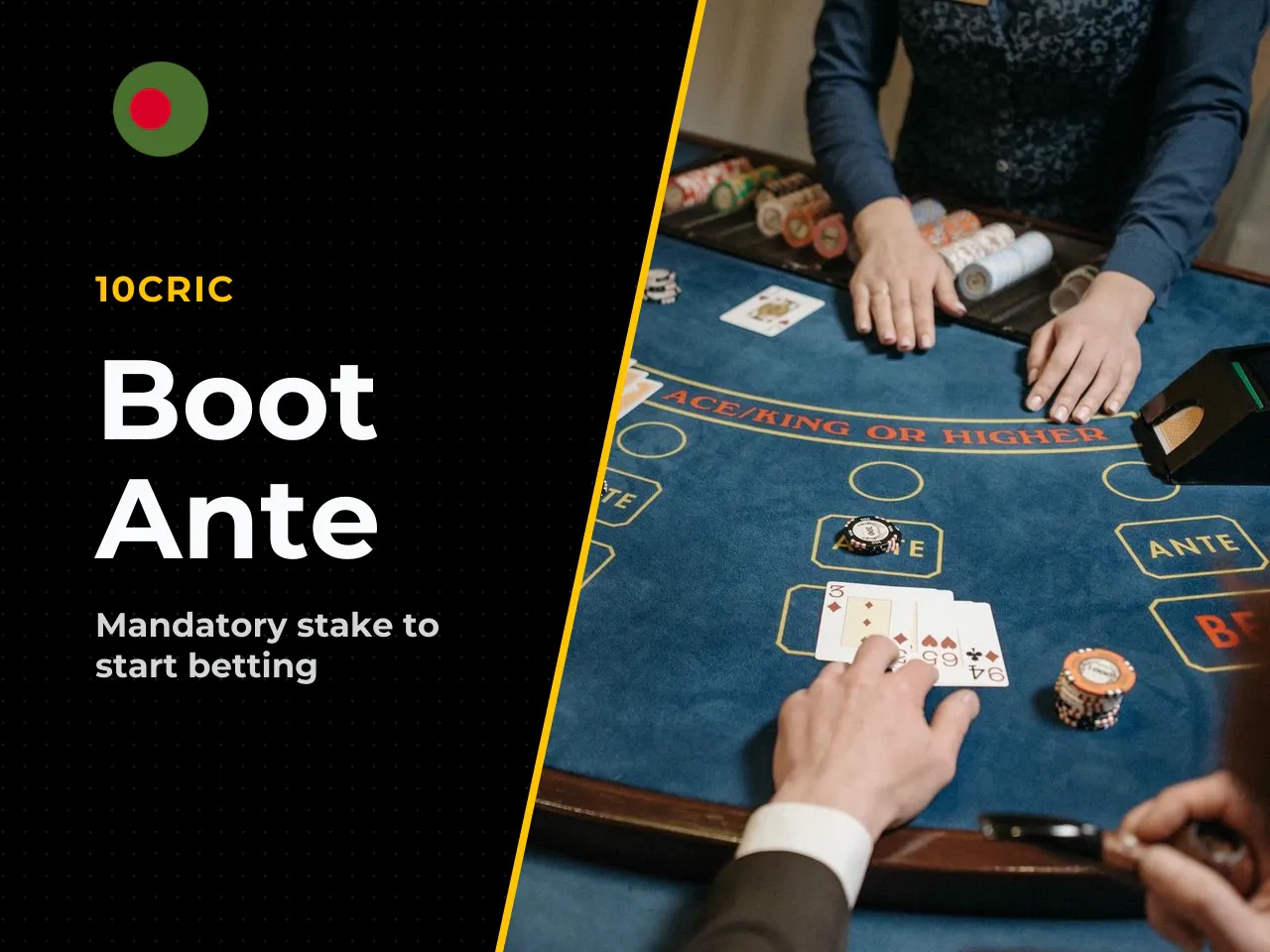
  1. Boot (ante). Before any cards are dealt, every player contributes a mandatory minimum stake, the boot, into the pot. This guarantees there is money to compete for and it defines the smallest unit of the game.
  2. Deal. The dealer shuffles and deals three cards face down to each player, one at a time.
  3. Status choice. Starting from the player to the dealer’s left, each player acts as Blind (has not looked at the cards) or Seen (has looked).
  4. Betting rounds. On their turn a player may chaal (call and match the current stake), raise the stake, request a sideshow (Seen players only), or fold, also called pack, forfeiting everything already contributed.
  5. Sideshow (optional). A Seen player may ask the immediately preceding player for a private card comparison. See section 5.
  6. Showdown. When only two players remain, either may call a show. Both hands are revealed and the stronger hand takes the pot. If several players remain and the hand has run long, some tables allow an alternative show in which all remaining players reveal.
  7. Payout. The pot goes to the winner. If all opponents fold earlier, the last player standing wins without ever showing the cards, which is precisely why bluffing carries real expected value here.

[Multimedia placeholder: round-flow diagram. Blocks in order: boot posted, three cards dealt face down, blind or seen choice, betting turns, sideshow, show, winner. Text labels must remain readable in the DOM, with alt text covering “teen patti rules”.]

3. Blind and Seen The Core

  1. Blind and Seen: The Core Betting Mechanic

Game modes: Blind and Seen
  • Blind:the player bets without looking at their cards. The minimum wager equals the current stake amount (1×).
  • Seen:the player looks at their cards before betting. To stay in the hand, a seen player must wager at least twice (2×) what a blind player would post at the same stake level.
  • Switching from Blind to Seen:a blind player may look at their cards at any point on their turn and continue as a seen player. From that moment the 2× rule applies to them.
Stake mechanics. The stake amount is

Stake mechanics. The stake amount is the reference bet size for the next player. When a blind player bets, that amount becomes the stake for whoever acts next. When a seen player bets, the stake carried forward is effectively half of what the seen player put in. That is the whole reason the blind position is mathematically cheaper per round.

This asymmetry is the single most misunderstood part of Teen Patti. Blind play is not naive. It is a cost-control strategy. A disciplined blind player buys information cheaply, keeps the pot small and forces seen opponents to pay double for the privilege of knowing their own cards. I have watched patient blind players at low-limit tables outlast three aggressive seen opponents without holding anything better than a pair. Not glamorous. Effective.

Age and risk notice. Teen Patti real money play is for adults only, 18+ in most jurisdictions and 21+ in certain venues and states. Money staked can be lost in full, and losses cannot be recovered by playing longer. If your goal is to learn the rules, use a free teen patti demo table first.

4. Teen Patti Hand Ranking (3 Patti Sequence List) and Probabilities

The hierarchy of combinations in Teen

The hierarchy of combinations in Teen Patti

  1. Trail / Trio / Three of a Kind. Three cards of the same rank. Highest: A-A-A. Lowest: 2-2-2.
  2. Pure Sequence / Straight Flush. Three consecutive cards of the same suit, for example A-K-Q of hearts, or 4-3-2 of hearts.
  3. Sequence / Straight / Run. Three consecutive cards of mixed suits, for example 8-9-10.
  4. Color / Flush. Three cards of one suit that are not consecutive, for example J-9-6 of spades.
  5. Pair / Two of a Kind. Two cards of the same rank plus one kicker, for example K-K-7. When two pairs are equal, the higher kicker wins.
  6. High Card. No pair, no flush, no sequence. The highest single card decides, then the second, then the third.

Note on rank order: in three-card Teen Patti a Sequence beats a Color (Flush), the opposite of five-card poker convention. The reason is purely combinatorial. Three consecutive cards of mixed suits occur less often (3.26%) than three non-consecutive cards of one suit (4.96%). If you arrived here from poker card habits, unlearn that one detail first.

Combination frequency, probability, and odds

There are 22,100 distinct three-card hands in a 52-card deck. The distribution looks like this:

CombinationHighest / Lowest exampleNumber of handsProbabilityOdds against
Trail (Trio / Three of a Kind)A-A-A / 2-2-2520.24%424 : 1
Pure Sequence (Straight Flush)A-K-Q / 4-3-2480.22%459 : 1
Sequence (Straight / Run)A-K-Q / 4-3-27203.26%29 : 1
Color (Flush)A-K-J / 5-3-21,0964.96%19 : 1
PairA-A-K / 2-2-33,74416.94%4.9 : 1
High CardA-K-J / 5-3-216,44074.39%0.34 : 1

Three practical conclusions follow.

  • Roughly three out of four hands you are dealt will be nothing but a high card. Folding is the statistically normal action, not a sign of weakness.
  • A pair is already a top-26% hand. Against two or three opponents it is often strong enough to keep betting.
  • A pure sequence is rarer than a trail (0.22% against 0.24%) yet it ranks below it. That is a rule convention, not a mathematical ordering. Worth remembering before you argue with a dealer.
Tie-breakers. When two hands fall into

Tie-breakers

When two hands fall into the same category, compare the highest relevant card first, then the next, then the third. For pairs, compare the pair rank first and the kicker second. Equal pair and equal kicker means the hands are genuinely tied, and then the table convention takes over.

Important correction on suits. Some guides claim identical sequences are resolved by suit hierarchy: spades over hearts over diamonds over clubs. That is a house rule, not a standard rule. In classic Teen Patti and in licensed live-casino implementations, suits carry no ranking value. Perfectly tied hands are either split, or resolved by the convention that the player who called the show loses. Confirm which version your table uses before you sit down, because on a coin-flip tie that clause decides who pays.

[Multimedia placeholder: hand-ranking table rendered as a semantic table with caption, header and body rows, all combination names and explanations available as DOM text rather than an image.]

5. Sideshow and Showdown Rules. Sideshow

  1. Sideshow and Showdown Rules

Sideshow, also called backshow, is a request by a seen player to privately compare cards with the player who acted immediately before them.

  • It is usually available only when more than two players remain in the hand.
  • The preceding player may accept or refuse, with no penalty for refusing.
  • If accepted, both hands are compared privately. The weaker hand must fold immediately. The stronger hand continues.
  • If the two hands are equal in value, the player who requested the sideshow must fold. This is the most punishing clause in the rule set. The initiator carries the tie risk.
  • Many rule sets allow only one sideshow request per betting round.

Showdown (show) is the final reveal.

  • A show can be called only when exactly two players remain.
  • Both hands are revealed and the higher-ranking combination wins the pot.
  • On a tie, the player who called the show loses.
  • If all opponents fold before a show, the last remaining player wins the pot and is not required to reveal anything.

Small asymmetry, large consequences. Both the sideshow and the show punish the person who forces the comparison. Read that as a design bias toward patience.

6. Complete Teen Patti Glossary

  1. Complete Teen Patti Glossary

  • Boot (Ante):the compulsory opening stake every player puts into the pot before the deal. It creates the initial pot and is a forced bet.
  • Post:the mandatory contribution made by a player who missed the boot and joins the table mid-game, so the pot is never short.
  • Stake amount:the reference bet size the next player must match. A blind player’s bet sets the stake at 1×. When a seen player bets, the carried-forward stake for the next player is half that amount.
  • Chaal:calling, meaning a bet equal to the current stake, placed to stay in the hand without raising.
  • Blind:betting without looking at your cards, at 1× the stake.
  • Seen:betting after looking at your cards, at a minimum of 2× the stake.
  • Sideshow / Backshow:a private card comparison between a seen player and the player immediately before them. Lower hand folds. On a tie, the requester folds.
  • Show / Showdown:the final reveal between the last two players. Higher hand wins. On a tie, the caller loses.
  • Pack / Fold:withdrawing from the hand and forfeiting all contributions to the pot.
  • Pot:the accumulated pool of all bets, awarded to the winner of the hand.
  • Teen Patti hands:the six combination categories, namely Trail, Pure Sequence, Sequence, Color, Pair and High Card.
7. Live Teen Patti by Evolution

  1. Live Teen Patti by Evolution: RTP, Ante Bonus, and Side Bets

Teen Patti is rarely found on a Western casino floor, yet its popularity across South Asia makes it one of the most-played gambling games in the world. That put it firmly on the radar of the big live-game studios. Evolution released Live Teen Patti in mid-2022, leaning on the Indian-market experience of its subsidiary Ezugi, while Playtech and Pragmatic Play built out comparable “Indian favourites” categories in their own lobbies.

Structurally, Evolution’s teen patti live casino product is closer to three-card poker against the house than to the multiplayer social game. Cards come from a single 52-card deck, reshuffled every round. There is no blind/seen mechanic, no chaal, no sideshow. You are playing the dealer, not the table.

Round structure

  1. Place an Ante bet to enter the round.
  2. Three cards are dealt to the player face up and three to the dealer face down.
  3. Decide: Fold and forfeit the Ante, or Play, which triggers an automatic Play bet equal to the Ante.
  4. The dealer’s cards are revealed and the two hands are compared.
Dealer qualification and win conditions

Dealer qualification and win conditions

  • The dealer qualifies with a hand containing a Queen or better.
  • Dealer qualifies, player wins:Ante pays 1:1, Play pays 1:1.
  • Dealer does not qualify, player wins:Ante pays 1:1, the Play bet is pushed and returned.
  • Dealer wins:both Ante and Play are lost.
  • Tie:both bets are pushed.

Ante Bonus

A Straight or better earns an Ante Bonus payout according to the game’s pay-table, whether or not you beat the dealer. You must have chosen Play rather than Fold to qualify, which is unlikely to be a problem with a hand that strong.

Side bets

Both side bets require an Ante bet first.

  1. Pairs Plus pays on a player hand of a pair or better, regardless of the dealer’s result and regardless of whether you folded.
  2. 6 Card Bonus pays on the best five-card poker hand formed from all six cards, your three plus the dealer’s three, again independently of the main game. Note the trap: in this five-card ranking a Flush outranks a Straight, the reverse of the three-card hierarchy on the very same table.

Theoretical returns (RTP)

BetTheoretical return (RTP)
Main game96.63%
Pairs Plus95.51%
6 Card Bonus91.44%

These figures match the official Evolution Live Teen Patti specification and are consistent with independent live-dealer documentation (Livedealer.org, 2022–2024). The practical reading: the main game is mid-range for a table game, while the 6 Card Bonus is the most expensive bet on the layout, returning under 92% over the long run. Side bets are entertainment, not value.

8. Demo Play, Simulated Gambling, and Practice Modes

Almost every Teen Patti product, whether an RNG app, a social version or a live-casino lobby, offers a free demo or practice mode. In principle that is the safest way to learn. You rehearse the round flow, memorise the hand hierarchy, test the interface and experiment with bet sizing without risking money.

Format comparison

FormatMoney at stakeOutcome generationDealerBest use
Demo / free playNone (practice credits)Software / RNGNoneLearning rules, hand ranks, interface
Teen patti online (RNG)Real moneyCertified random number generatorNoneFast, low-limit play
Teen patti live casinoReal moneyPhysical cards, streamedReal human dealerTransparency of the deal, higher limits

The core hand rankings never change between formats. What changes is stakes, delivery channel, dealer model and speed, and speed matters, because event frequency is one of the structural features most consistently linked to gambling harm.

Empirical evidence on demo and practice modes

The research literature carries one clear warning, and it concerns a specific failure mode: demo games that are more generous than the real thing.

In a controlled experiment with 128 participants aged 18–24, players were exposed to demo conditions with inflated, normal or unspecified return-to-player settings. Participants in all conditions then gambled with money in a realistic online slot simulation.

«Participants exposed to an inflated RTP in demo mode placed significantly larger bets in subsequent real-money play compared with the control group.» Experimental study of demo modes in simulated gambling (n = 128, ages 18–24), 2023.

The obvious fix did not work, which is the uncomfortable part:

«Pop-up warning messages in inflated demo modes did not significantly reduce monetary gambling behaviour, indicating that simple informational prompts are insufficient.» Experimental study of demo modes in simulated gambling, 2023.

Limitation of the evidence base, stated

Limitation of the evidence base, stated plainly: we found no high-quality experimental research specifically on Teen Patti demo environments, with transparent methodology and reported sample characteristics, for 2023 or later. The findings above come from slot-based simulations and should be read as transferable but indirect evidence for card-game demo modes. A genuine gap in the literature, not a settled conclusion.

Practical implication: treat a teen patti demo as a rules trainer only. Never read demo win frequency as a forecast of real-money results, and be actively suspicious when a free version feels unusually kind.

Online and mobile implementations. Online Teen

Online and mobile implementations

Online Teen Patti comes in three broad shapes: peer-to-peer cash and tournament tables where you play other users, house-banked RNG versions where you play an algorithm, and live-dealer tables where you play a streamed human dealer. Mobile apps drove most of the growth, adding social layers on top of a rule set that takes ten minutes to learn: private tables with friends, festival events, leaderboards, chat, gifting.

Developers describe the mobile segment as expanding quickly, with investment in richer graphics, multiplayer modes and live-casino integrations aimed at longer sessions. Caveat: those characterisations come mostly from developer and marketing material rather than independent market research, so read them as industry claims, not verified data.

Live dealer growth and why it matters here

The more reliable signal comes from the broader category. Live-dealer casino games have grown fast in the global online gambling market: industry analysis indicates that live-dealer online games expanded roughly 25% year-over-year to a $12 billion market in 2023.

«Peer-to-peer live-dealer variants, where players interact with each other and the dealer in real time, showed roughly 12% growth in adoption in 2023.» Analysis of live-dealer blackjack variants, 2023.

Teen Patti is a natural beneficiary of that trend. It is culturally anchored, fast, easy to stream, and already supported by Evolution, Ezugi, Playtech and Pragmatic Play.

Explicit limitation: precise data on Teen Patti’s share of live-dealer revenue is not available in current public reports. Any percentage attributed to the game alone should be treated as an estimate. What can be stated confidently is the direction of the category, not the size of the individual title.

Verify before you act. Where real-money play is lawful for you, check five things on the operator’s own pages: the age gate (18+, sometimes 21+), whether teen patti casino tables are available in your region at all, the published rules, the table limits, and the deposit and withdrawal conditions. If any of that is missing, do not register.

Online gambling and mental health outcomes

Online gambling and mental health outcomes

Online gambling is associated with higher rates of problem gambling than traditional offline gambling, and the explanation is structural rather than moral: continuous availability, private and unsupervised access, very high event frequency, cashless deposits, instant re-staking after a loss. Clinical and regulatory reviews of interactive gaming keep arriving at the same conclusion. The delivery channel itself acts as a risk multiplier.

Note on evidence strength: the comparative claim above is well supported in review literature on interactive gambling generally, including the Pennsylvania assessment cited below, though effect sizes vary between studies and populations. Teen Patti–specific prevalence data is not available in the sources reviewed here.

In the Indian context, clinical reviews place Teen Patti among the most frequently reported activities in patients presenting with gambling-related disorders, alongside satta and matka betting.

Online gambling and suicidality

Clinical and public-health literature documents the most severe end of the harm spectrum. Practitioners highlight cases where individuals, overwhelmed by debt and shame, have resorted to suicide.

«The speed and anonymity of online gambling, combined with easy access to credit, can produce catastrophic losses within a very short time.» “Online gambling and suicide: gambling with lives”, clinical and public-health commentary.

The mechanism deserves attention from players and families alike. Harm in online card games is rarely one dramatic loss. It is usually a compounding sequence: a losing session, an unplanned deposit, borrowed money, concealment, escalation. The 74.39% high card frequency shown earlier explains why chasing feels justified in the moment, and why it almost never works.

Practical harm-reduction measures

  • Set a hard loss limit and a session time limit before you start, not during play.
  • Use platform tools: deposit limits, loss limits, reality checks, cooling-off periods, self-exclusion.
  • Never gamble with borrowed money, credit, or funds meant for essentials.
  • Treat any urge to “win it back” as a stop signal rather than a strategy.
  • Respect age restrictions. Real-money gambling is adults only, commonly 18+, and 21+ in some jurisdictions and venues.
Teen Patti as gambling in Indian

Teen Patti as gambling in Indian case law

Legal status in India is shaped by state-level gambling laws, central legislation and judicial interpretation of the classic “game of skill” versus “game of chance” distinction. Readers who want the wider industry picture can review the online gaming regulatory landscape alongside this section. Because Teen Patti outcomes are determined by the deal rather than by demonstrable skill, courts have generally treated real-money play as gambling, while also recognising, as the Bombay High Court did in January 2024, that a game of chance played without any monetary prize does not automatically amount to gambling.

Promotion and Regulation of Online Gaming

Promotion and Regulation of Online Gaming Act, 2025

The central legislative shift arrived with the Promotion and Regulation of Online Gaming Act, 2025, which draws a sharp line between online social games and e-sports on one side and online money games on the other. Under the Act, no person may offer, aid, abet, induce or otherwise engage in the offering of an online money game.

The prohibition is deliberately built to cut off the commercial infrastructure as well as the product. The Act bans advertising and promotion of online money games and prohibits banks and payment systems from processing related transactions. In practice that removes both the marketing funnel and the payment rails on which real-money Teen Patti platforms depended.

Market effects were immediate and visible. Major Indian platforms withdrew cash functionality. MPL, for instance, now displays that deposits are no longer available on its app and that, in compliance with the law, no cash games are available.

Taxation, enforcement, and blocking of platforms

Taxation, enforcement, and blocking of platforms

Two further levers shape the environment:

  • Taxation in physical casinos. Effective 1 October 2023, under Notification No. 51/2023 of the Ministry of Finance (Department of Revenue, CBIC), GST at 28% applies to amounts paid for chips or playing coupons in Indian casinos, including Deltin properties where the game appears as Indian Flush. GST paid on purchase is not refunded when chips are returned or encashed.
  • Site and app blocking. The Ministry of Electronics and Information Technology has used its blocking powers extensively. From 2022 to February 2025, MeitY issued 1,410 blocking directions covering online betting, gambling and gaming websites, including mobile applications.

Anyone encountering a real-money Teen Patti platform reachable from India in 2026 should therefore assume elevated legal, payment and counterparty risk.

Bangladesh and the wider South Asian

Bangladesh and the wider South Asian picture

For readers in Bangladesh the framing is different again, and stricter than many app store listings imply. Gambling is broadly prohibited under the Public Gambling Act of 1867, which still forms the backbone of local law, and the Bangladesh Telecommunication Regulatory Commission has periodically ordered ISPs to block betting and casino domains. Card play for stakes among friends occupies a grey space socially, but that grey space is not a legal permission.

Three consequences follow for local readers. Payments are the weak point: card and mobile-wallet transactions to offshore gambling operators can be reversed, frozen or flagged. Dispute resolution is effectively absent, since an offshore licence gives a Bangladeshi user very little practical leverage.

And the sports-first alternative is simply safer: following fixtures, form, statistics and match previews costs nothing and carries no financial exposure. Our editorial line here is deliberately conservative. We explain how the game works. We do not encourage you to stake money where the law says you should not.

International comparison: Pennsylvania’s interactive gaming assessment

Regulated markets provide a useful counterfactual. Pennsylvania’s state-commissioned assessment of interactive gaming examined the effects of legalising and licensing online gambling. It does not address Teen Patti directly, yet its findings on interactive gaming help explain how a regulated framework could, in theory, handle games of this type.

«Regulated online gambling still carries significant risk of addiction and financial harm, which underlines the importance of monitoring and accessible treatment provision.» Pennsylvania Interactive Gaming Assessment (Sterner, Russell, Ferrara), 2024.

The lesson is not that regulation removes harm. It is that regulation makes harm measurable and treatable, while prohibition plus grey-market supply makes it invisible.

Platform verification checklist, where real-money play

Before depositing anywhere, confirm all five points:

  1. Licence: a named licensing authority and a verifiable licence number.
  2. RTP: the return-to-player percentage published in the game rules or provider documentation.
  3. RNG certification: independent testing evidence (GLI, eCOGRA, iTech Labs or equivalent) for RNG-based versions.
  4. Table limits: minimum and maximum stakes visible before you enter the table.
  5. Regional availability: the game and the operator must be lawfully available in your jurisdiction.

If even one of these cannot be verified, treat the platform as unverified. No exceptions.

12. Teen Patti Strategy, Bankroll Management, and Pre-Session Checklist

Teen patti strategy is not about beating the maths of the deal. It is about controlling how much you pay to see each outcome, and how much information you hand over while doing it.

When to keep betting and when

When to keep betting and when to fold

  • Know your odds. With a trail at 0.24% and a pair at 16.94%, most hands are marginal. Bet in proportion to how your hand ranks against the 74.39% baseline, not against your best-case fantasy.
  • Know when to fold. Folding early preserves chips for the hands worth contesting. Discard weak high card holdings, especially unconnected off-suit cards without an Ace or King, when seen opponents are raising hard.
  • Read the middle ground. A pair below 7-7 plays like a coin flip against two aggressive opponents, while a broken sequence draw is worth nothing at all, because there is no draw in this game. What you hold is final.
  • Start small. Open sessions at the lowest available stake until you have read the table dynamics and the pace of betting.
  • Use extended blind play. At low limits, staying blind through the opening rounds conserves bankroll at 1× while forcing seen opponents to pay 2× for the same information.
  • Bluff sparingly. Bluffing works because most opponents also hold high cards, but a predictable bluffer is a donor. Vary frequency and pick opponents who actually fold.
  • Be careful with sideshows. Never request one against an obviously strong or aggressive player. On a tie you must fold, so the initiator carries the downside.
  • Keep emotions in check. Facial reactions, hesitation and bet-timing patterns leak information at live tables, and in live-dealer chat as well.
  • Observe opponents. Track who raises only with strength, who calls everything and who folds under pressure. Betting patterns beat any physical tell.

Practice in demo, then control the stake

  • Fix a stake cap per hand, a small fixed percentage of your session bankroll, and never exceed it, whatever the streak is doing.
  • Set both a loss limit and a win limit before the first hand, and leave when either is reached.
  • Treat the demo-to-real-money transition as a separate, high-risk decision, not a continuation of practice. Reset limits from scratch at that point.
  • Never top up mid-session to “finish even”. That sentence has cost more bankrolls than bad cards ever did.

Pre-session checklist

  1. Read the specific rule set of your table: tie conventions, sideshow limits, show thresholds.
  2. Memorise the six hand ranks and their probabilities.
  3. Practise the round flow in demo mode, for mechanics only, never for expected returns.
  4. Verify the live table’s limits, RTP, licence and regional availability.
  5. Set deposit, loss and time limits before you open the table.

  1. Teen Patti FAQ

Responsible gambling notice. 18+, and 21+ in some jurisdictions. Gambling carries a real risk of financial loss and can become addictive. This article is educational and informational. It is not legal, financial or medical advice, and it is not an inducement to gamble. If you or someone close to you is struggling, contact a licensed clinician or a recognised gambling support service.